

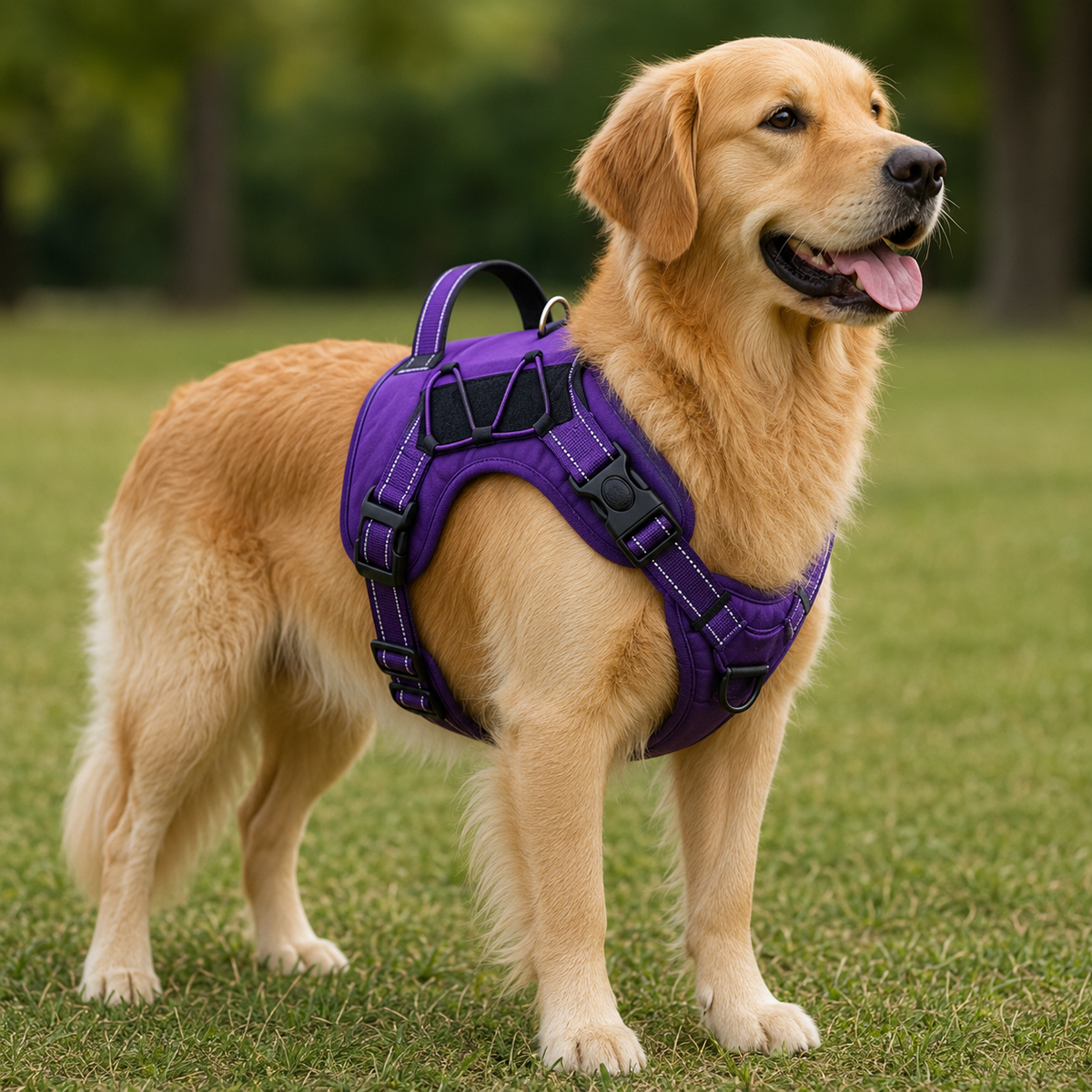
A harness is one of the most-used pieces of kit in a dog's life, but a lot of owners get the fit wrong without realising it. A harness that's too loose can slip or let your dog back out of it. One that's too tight can rub, chafe, or restrict natural movement. Getting the fit right makes a real difference to how comfortable your dog is on every walk.
Step 1: Measure Before You Buy
Start with a soft tape measure around the widest part of your dog's chest, just behind the front legs. Add a couple of centimetres for comfort, then check this against the sizing guide for the harness you're looking at. Every brand sizes slightly differently, so don't assume your usual size will carry over.
Step 2: Check the Neck and Chest Straps
Once the harness is on, you should be able to fit two fingers flat between the strap and your dog's body, both at the neck and around the chest. Any tighter and it's at risk of rubbing. Any looser and your dog could wriggle out of it.
Step 3: Watch How It Sits on the Shoulders
The harness shouldn't dig into the shoulders or restrict the front legs from moving freely. Walk your dog a short distance after putting it on and watch how they move. If there's any hesitation, stiffness, or an odd gait, the fit needs adjusting.
Step 4: Look for Rubbing Points
Check behind the front legs and around the neck after a walk. Redness, flattened fur, or sore patches are signs the harness is either too tight or sitting in the wrong position.
Step 5: Reassess as Your Dog Grows or Changes
Puppies grow quickly, and adult dogs can gain or lose weight over time. A harness that fit well six months ago might not fit the same way now, so it's worth rechecking the fit every few months.
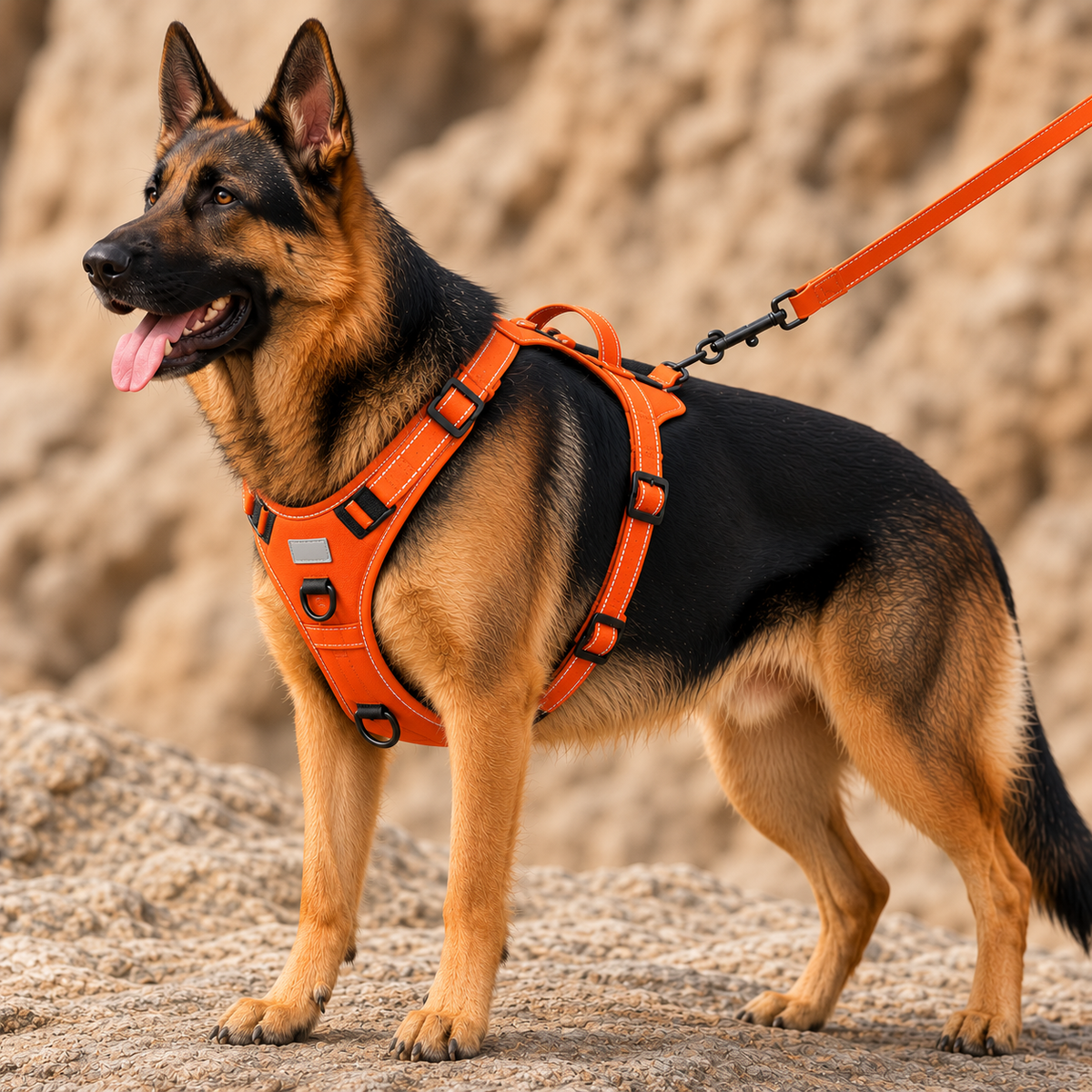
Getting the fit right takes a few extra minutes, but it means every walk after that is comfortable, secure, and free from unnecessary rubbing or restriction.

Leave a comment
This site is protected by hCaptcha and the hCaptcha Privacy Policy and Terms of Service apply.